Elder Protection Programs
Information For
Florida's Department of Elder Affairs offers a lot of programs to help the elderly receive the care they need. Please use the dropdown or scroll down to find the category you are looking for.
Elder Abuse Prevention Program
Elder abuse refers to any knowing, intentional or negligent act causing harm or a serious risk of harm to a vulnerable adult. Abuse, neglect, exploitation, or fraud can happen anywhere, anytime, and often affects the most vulnerable members of our community.
The DOEA Elder Abuse Prevention Program supports programs and services to protect elders from abuse in all forms, physical, emotional, and financial. In partnership with the Department of Children and Families Adult Protective Services, DOEA and the Aging Network work to protect disabled adults or elderly persons from further occurrences of abuse, neglect or exploitation. Services provided may include protective supervision, placement, and in-home and community-based services.
How to Report Elder Abuse, Neglect, and Exploitation
The Florida Department of Elder Affairs (DOEA) is committed to promoting the well-being, safety, and independence of Florida's older adults, their families, and caregivers. DOEA's role is to provide education, increase awareness, and connect individuals with information and referrals related to elder abuse, neglect, and exploitation. While DOEA works in partnership with the Florida Department of Children and Families (DCF), Adult Protective Services, and Florida's Aging Network to support vulnerable adults, the Department does not have the authority to investigate allegations of abuse, neglect, or exploitation or provide legal advice. Through Florida's Aging Network, individuals may be referred to services and supports that promote safety, independence, and well-being.
If you suspect that a vulnerable adult is being abused, neglected, or exploited, report it immediately to the Florida Department of Children and Families (DCF) Abuse Hotline. DCF is the state agency responsible for receiving and investigating reports of abuse, neglect, and exploitation involving vulnerable adults. Reports may be submitted online at https://www.myflfamilies.com/services/abuse or by calling 1-800-96-ABUSE (1-800-962-2873). Press 2 to report suspected abuse, neglect, or exploitation of a vulnerable adult. This toll-free number is available 24/7. TTY (Telephone Device for the Deaf): 1-800-955-8771. To report via fax, please print and complete the DCF fax reporting form with details and fax it to 1-800-914-0004.
Please let me know if you have any questions or concerns.
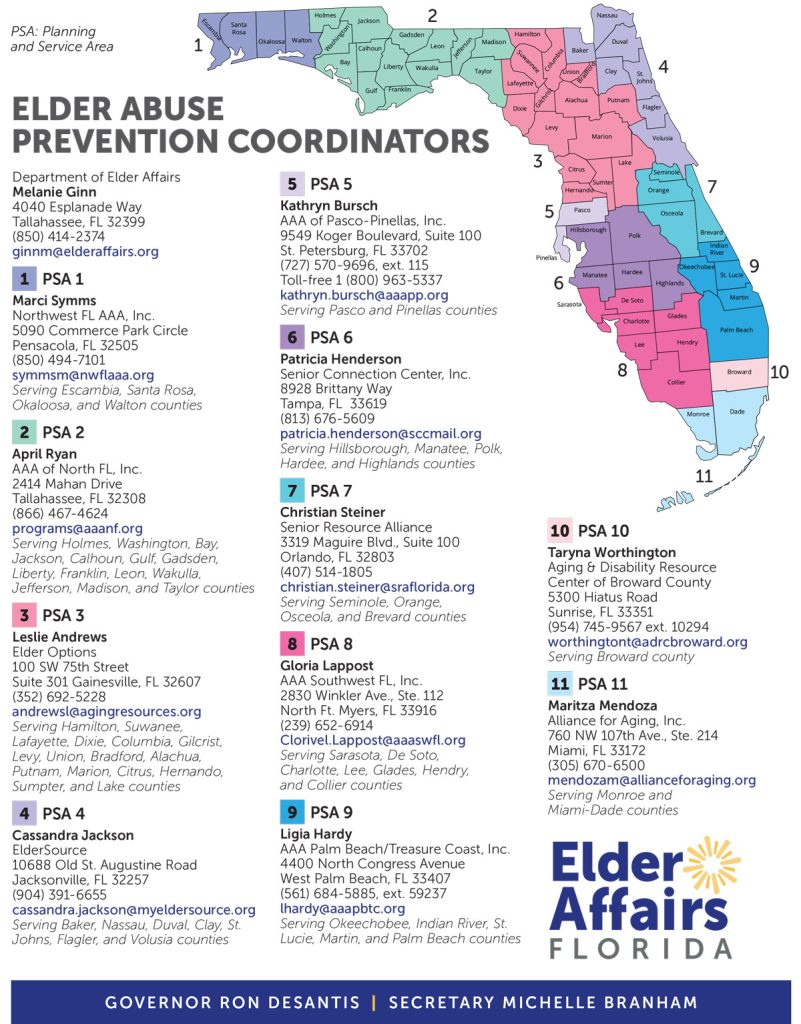
Other Resources:
Prevent Financial Abuse – Department of justice Elder Justice Initiative
In addition to the Elder Abuse Prevention Program, DOEA offers many other programs that prevent elder abuse, neglect or exploitation.
The SMP (Senior Medicare Patrol) Program empowers seniors to prevent Medicare fraud.
PROTECT – Protect yourself from Medicare errors, fraud, and abuse. Protecting your personal information is the best defense. Resources are available in English and Spanish.
DETECT – Learn to detect potential errors, fraud, and abuse. Even when you do everything right, there is a chance that you could be a target of Medicare fraud. Resources are available in English and Spanish.
REPORT – If you suspect that you have been a victim of Medicare fraud, report it immediately. Contact a SHINE SMP volunteer at 1-800-96-ELDER.
For more information on the SHINE, SMP Program contact us.
Elder Opportunities Fraud Awareness and Prevention Unit
The Office of Public and Professional Guardians established a statewide toll-free hotline to receive complaints made against registered professional guardians. The hotline number is 1-855-305-3030. In addition, click here to submit a complaint against a guardian via the internet: Any person who wishes to file a complaint against a registered professional guardian may do so anonymously.
The Long-Term Care Ombudsman Program advocates for the Health, Safety, Welfare, and Civil Rights of residents in long-term care facilities. All complaints received by the Ombudsman Program are confidential.
- Health – Are you receiving the services that you need during your residence at the facility? The facility is required to provide or assist you in obtaining adequate and appropriate healthcare.
- Safety – Is the facility protecting you from injury or aggravating an existing injury? Do you feel safe in your living environment? It is the facility’s responsibility to ensure that you live in a safe and decent living environment, free from abuse and neglect.
- Welfare – Your overall welfare is important. While the facility is designed to provide medical care, it is also your home while you are there. Your welfare combines your medical needs with your social needs.
- Civil Rights – Your entry into a long-term care facility does not mean that you lose any of your rights. You have the right to civil and religious liberties, including knowledge of available choices and the right to independent personal decisions.
For more information about the Long-Term Care Ombudsman Program or your rights as a long-term care resident contact us at 1-888-831-0404 or click here.